
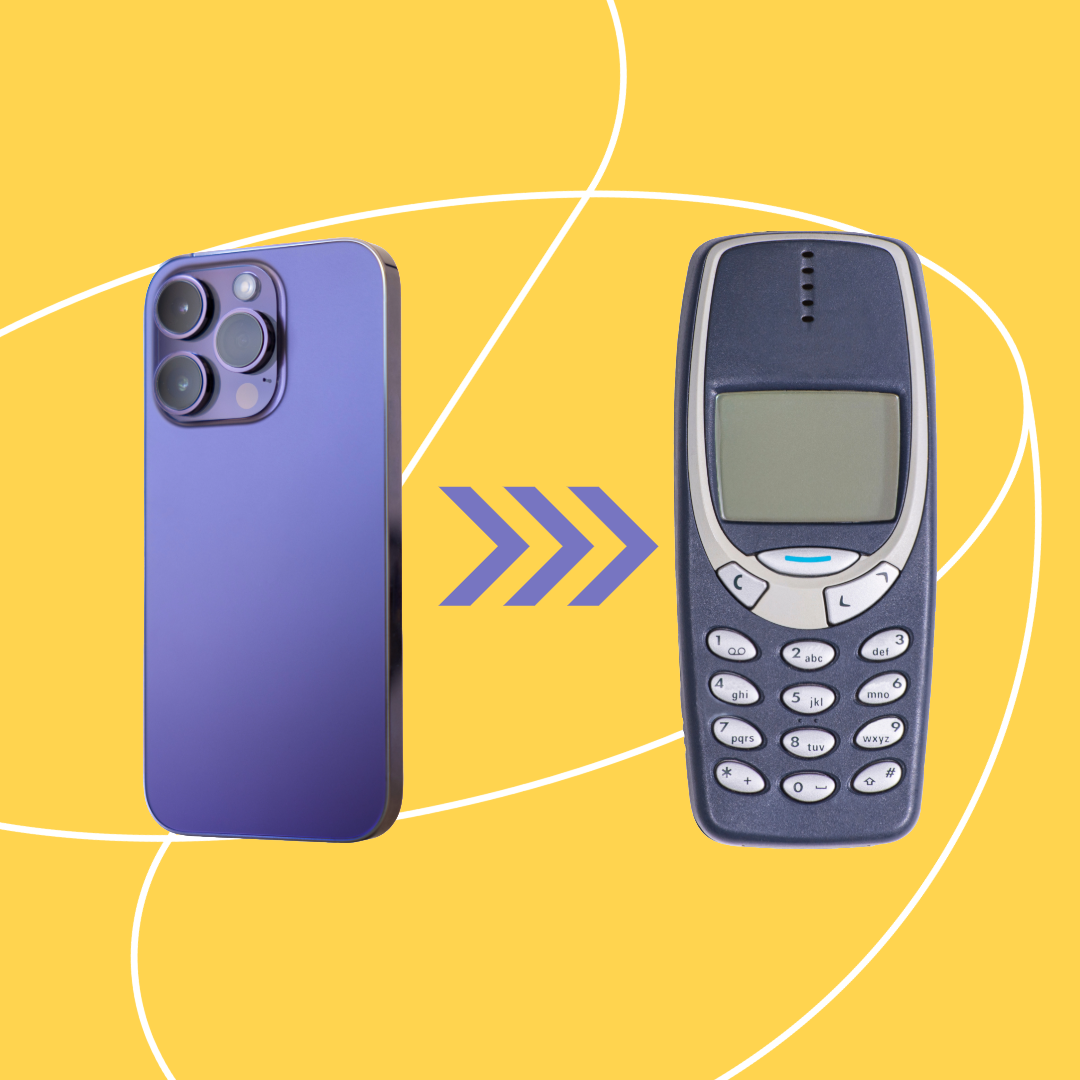
I Swapped My iPhone for a Nokia for 4 Weeks: Here’s What I Learnt about Phone Addiction
I – like many others, thought I was a fairly balanced user of my iPhone. What happens when you remove the most powerful distraction device in your life… and replace it with a humble Nokia? I learnt what I would call unconscious phone addiction.
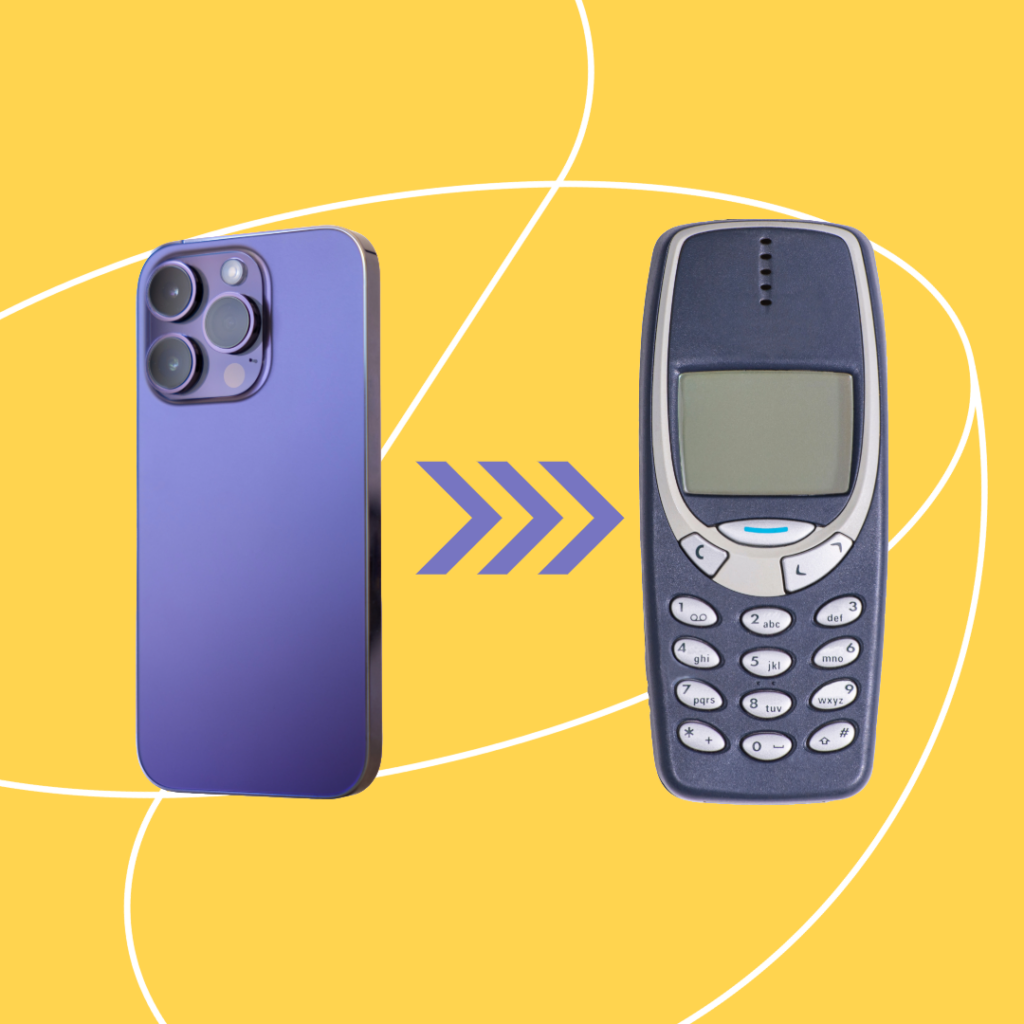
The Social Experiment begins.
Why? No; not to become a “no smartphone ever again” person. Not to reject technology. But to get honest about two things:
- How much time my iPhone was stealing from my life, and
- How reliant I’d become, often without even noticing.
Mind you; I run a business, a family, a household and I went in with the same dramatic questions many of us have (or secretly fear): Will I last? Will I crumble? Will everything fall apart?
Four weeks later, I’ve got answers. And they surprised me.
Below is the Week to Week breakdown, the real lessons, and the criteria I’m using moving forward — so you can run your own version without needing to throw your phone in the ocean.
…or watch the week to week videos here on The Social Experiment.
Week 1: The withdrawal is real (and wildly revealing)
I expected inconvenience. What I didn’t expect was the internal negotiation.
The first 24 hours felt like withdrawals. I caught myself trying to justify breaking my own rules:
- “I just need it for one thing.”
- “This is necessary.”
- “Surely this doesn’t count…”
And that’s the point. When your brain starts bargaining, it’s showing you something important: the habit isn’t just functional — it’s emotional.
The biggest lesson in Week 1 was brutally simple:
I reach for my phone far more than I need to.
Not because I always have a reason. Often because I have a feeling:
- boredom
- discomfort
- awkwardness
- uncertainty
- a tiny gap of silence
The phone addiction was real.
The biggest downside that first week? Communication via sms. Not being able to clearly coordinate with friends when I needed to was frustrating.
But the biggest upside? No alerts. No badges. No pings calling out: “Look at me.” That silence was like getting my attention back in instalments.
Watch Week 1 now
Week 2: You discover what’s helpful… and what’s just noise
By Week 2, the experiment stopped being a novelty and started becoming a mirror.
A question kept coming up from friends:
“What are you replacing it with?”
For example: note-taking.
One of my favourite “smartphone benefits” is capturing ideas on the go — especially when I’m walking, listening to music, or mid-inspiration. Usually I’d stop and type, dictate, or voice-record a thought.
Without that? At first, it felt like losing a limb.
But then a new rule emerged naturally:
If it’s important enough, I’ll remember it.
And that brought unexpected clarity. Not having instant access to every thought, every note, every answer forced me to focus on what mattered most.
Week 2 also showed me how often we use our phones to look up… everything.
Every random curiosity. Every half-thought. Every tiny question.
Without the phone, I realised something quietly confronting:
We don’t need constant information to live a good life.
Most of what we “need” to look up is just mental clutter wearing a productivity costume.
And here’s the real kicker: when you go to look something up, you often get distracted. One quick search becomes a rabbit hole. Then time disappears. Then you wonder why you feel flat.
Week 2 wasn’t always easy, but it was honest.
Watch Week 2 now
Week 3: It gets easier — and you start craving a purge
Week 3 was the turning point.
Not only did it feel easier, but something else happened: people around me understood instantly.
Friends, family, strangers — the moment they saw the Nokia and I explained what I was doing, the reaction was almost universal:
“Oh my god… I need that.”
There was this unspoken recognition that many of us don’t have the healthiest relationship with our phones.
We know it. We feel it. We just don’t always know what to do about it.
By Week 3, I wasn’t missing my iPhone much. Which says a lot.
That’s when I started asking a new question:
What apps do I actually want on my phone?
Not what apps are “normal” to have.
Not what apps society expects.
Not what apps are convenient.
What apps genuinely add value?
Because here’s what became obvious:
So many apps are attention-stealing by design.
The term app makers refer to us when we register is ‘users’. Where else does this term apply to humans? Let that land.
Even when you turn notifications off, they still try to pull you back in to the ‘feed‘. You open the app and it nags you to turn notifications back on.
The deeper lesson of Week 3 was this:
A lot of what we call “convenience” is actually compliance.
And those dangling carrots often take more than they give.
Watch Week 3 now
Week 4: The final week — and the “dirty” iPhone moment
Week 4 was the finale… but also the beginning.
Surprise, surprise, I wasn’t rushing to go back. I wanted to focus on the lessons and insights, because awareness is the only thing that makes change sustainable.
And when I picked up my iPhone again?
The best word I can use to describe the feeling was: dirty.
Not because the phone is evil. But because my relationship with it suddenly felt obvious — like I could finally see the invisible strings.
The Social Experiment was a sobering experience and I achieved more than I hoped it would:
- It showed me where my phone truly helps.
- It showed me where it steals time.
- And it forced me to choose what deserves access to my attention.
Watch Week 4 now
The App Purge: I had 159 apps… and I only needed 9
Here’s the list I made after four weeks without an iPhone.
I originally planned a “top 10” list… but I couldn’t even get to 10.
The 9 apps that earned a place on my phone
(Least important to most important)
9) Weather
So I can plan walks and make the most of a beautiful day.
8) Calendar
Useful, yes — but interestingly, being without it made me more organised in some ways.
7) Voice Memos
For recording meaningful conversations and family stories without turning the moment into content.
6) WhatsApp
Family group chats and keeping connected with key communities.
5) Yoga
A daily ritual that has kickstarted my day for years — and now I’m more present doing it.
4) Notes
Capturing thoughts, organising my brain, and dictation when ideas land.
3) Audible
Audiobooks bring depth, meaning, growth and continually add to my life.
2) Music
Music brings me so much movement, expression and adds so much joy to my life.
1) Messaging – the app I missed the most!
Quick communication and connection with the people that mattered most in my life.
And that’s it.
Out of 159 apps, only nine felt essential after a month without them.
Let that land.
The surprising one: camera and photos didn’t automatically make the cut
This is still a live question for me.
The camera isn’t inherently distracting… but it can change how we experience moments.
We’ve all seen it: fireworks, concerts, birthdays — thousands of people watching life through ‘the screen’.
I’m not saying “never take photos”. Some moments matter and the lived memory is beautiful.
But I am questioning the default. Do we document too much and experience too little?
That’s a conversation for another day, but it’s part of the new relationship I’m building.
The new criteria: which apps need to earn a spot on my phone
Here’s the filter I’m using moving forward. An app earns its place if:
-it’s functional
-adds genuine value
-helps me live my life, not escape it
-doesn’t advertise, upsell, or constantly lure attention
-doesn’t create rabbit holes of time wasted
-supports my relationships, wellbeing, or creativity
Everything else goes into the “junk-pile” of attention stealing.
Because time is the most precious non-renewable resource we have. Once it’s spent, it’s spent.
So the real question becomes:
What have I sold out for the sake of convenience?
Conclusion: The Nokia experiment ended… the real experiment begins
Week 4 is done. The Nokia chapter is closed. But the bigger experiment continues.
Because the real test isn’t quitting your phone.
It’s reintroducing it with boundaries and seeing what creeps back in over time.
My plan is to keep tracking this with check-ins:
- one month
- six months
- one year
Not to be perfect — but to stay awake to what’s happening.
If you take one thing from my Social Experiment, let it be this:
Your attention is your life. Remeber your time is your most precious non-renewable resource.
I learnt that phone addiction can creep in to our lives one small convenience at a time.
If you’re feeling like there’s “never enough time”, here’s a gentle challenge:
-Have an honest look at your screen time.
-Ask yourself: What am I trading my time for?
-Then choose one tiny change that gives you some of it back.
If you took something away from this blog, please share with someone who’s been saying, “I really need to get off my phone.”
Because honestly?
Same.
…if you would like to watch the future updates you can go straight to the videos here on The Social Experiment.
Sitrus is all about cultivating Happy Healthy Humans.
If you feel like you are surviving rather than thriving, check out our Thrive page and start living a delicious life!